Membrane Pressing Production Process for PVC Decorative Film
This guide walks you through the complete membrane pressing production process for PVC decorative film—from substrate selection and CNC routing to sanding, putty repair, adhesive spraying, and vacuum thermoforming. Learn why this craft rivals solid wood in complexity and delivers superior durability, design flexibility, and cost efficiency for bulk procurement.
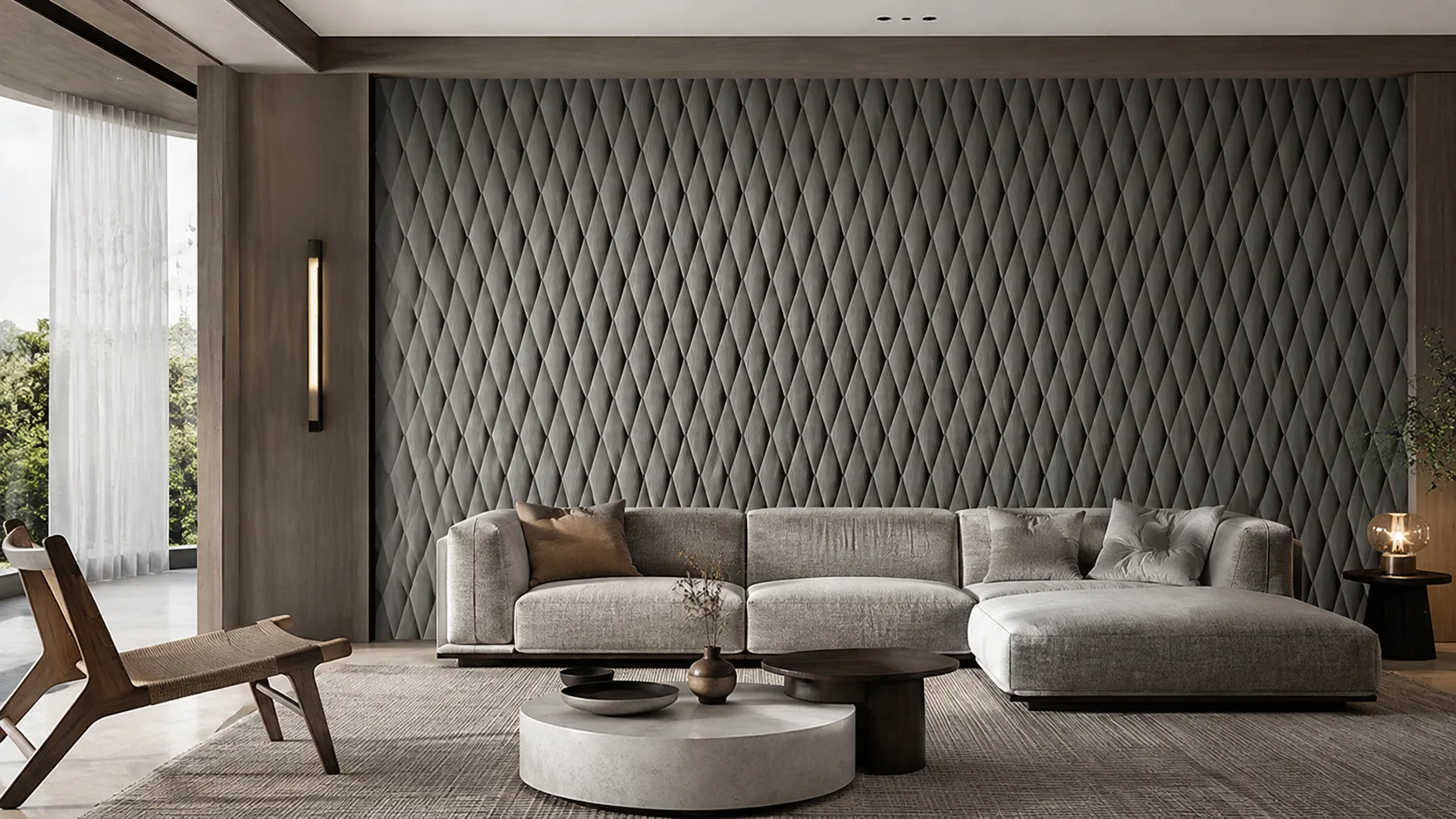
Membrane Pressing Production Process for PVC Decorative Film
Membrane pressing (also known as vacuum thermoforming) is one of the most intricate manufacturing processes in modern furniture production—and its complexity rivals that of solid wood craftsmanship. This guide walks you through the complete membrane pressing production process for PVC decorative film, from substrate selection to final trimming, so you can understand exactly what goes into every high-quality finished component.
Substrate Selection: From MDF to ENF-Grade and Beyond
The membrane pressing production process begins with substrate selection. Traditionally, medium-density fiberboard (MDF) has been the standard substrate for membrane-pressed components. However, as environmental regulations tighten and consumer demand for sustainable materials grows, manufacturers are increasingly turning to alternatives.
Today's substrate options include:
- Reed board (Luhua board) – A high-density panel made from natural reed fibers
- OSB (oriented strand board) – Engineered wood with excellent dimensional stability
- ENF-grade MDF – The highest formaldehyde emission classification available, meeting the most stringent indoor air quality standards
ENF-grade materials represent the industry's commitment to healthier indoor environments. When sourcing membrane-pressed components, always verify the substrate's environmental certification to ensure compliance with your market's regulations.
CNC Routing and Profile Carving
Once the substrate is selected, the next step in the membrane pressing production process is CNC routing. Computer numerical control (CNC) machines carve the desired profiles, shapes, and decorative patterns into the substrate surface.
This stage is critical because:
- It determines the final aesthetic profile of the component
- It creates the three-dimensional surface that the PVC decorative film will later conform to
- Precision routing ensures consistent quality across large production runs
The CNC routing process must account for the film thickness and the thermoforming characteristics of the PVC decorative film to achieve optimal adhesion and surface finish.
Sanding and Surface Preparation
After routing, the carved components move to the sanding stage. Sanding serves two essential purposes:
- Removing burrs and rough edges left by the CNC routing process
- Creating a smooth, uniform surface for optimal adhesive bonding
While automated sanding equipment handles the bulk of this work, areas with complex profiles, tight corners, and intricate details often require manual sanding. Skilled workers meticulously sand these challenging areas by hand to ensure every surface is perfectly prepared.
This combination of machine and manual sanding is what sets premium membrane pressing manufacturers apart from lower-cost competitors. The extra labor investment pays off in superior film adhesion and a flawless final finish.
Putty Repair: The Overlooked Quality Step
One of the most frequently overlooked steps in the membrane pressing production process is putty repair (also known as filling or patching). During routing and sanding, it is common for small pits, dents, and surface irregularities to appear on the substrate.
Many membrane pressing factories skip this step entirely to cut costs and shorten production cycles. However, quality-focused manufacturers:
- Inspect every component for surface defects after sanding
- Apply specialized wood filler or putty to fill pits and level uneven areas
- Sand the repaired areas smooth once the filler has cured
- Repeat the inspection-repair-sanding cycle until the surface is flawless
This painstaking process ensures that the final PVC decorative film application has a perfectly smooth, blemish-free substrate to adhere to. The result is a finished component that looks and performs like a premium product.
Adhesive Spraying
With the substrate fully prepared, the membrane pressing production process moves to adhesive spraying. This step involves applying a uniform layer of adhesive to the substrate surface to ensure strong, lasting bonding between the substrate and the PVC decorative film.
Key adhesive spraying requirements include:
- Spray sequence: End faces → front profile → front + profile → end faces (repeating for complete coverage)
- Flat surfaces: One spray pass is typically sufficient
- End faces and profile areas: Two to three spray passes are required for adequate coverage
- Pot life: Once the adhesive's main agent and hardener are mixed, the active window is 4–6 hours
- Processing window: Sprayed components must be processed within 4 hours for optimal bonding results
Proper adhesive spraying is essential for preventing delamination and ensuring the PVC decorative film remains securely bonded throughout the component's service life.
Vacuum Thermoforming (Membrane Pressing)
The centerpiece of the membrane pressing production process is vacuum thermoforming—the step that gives the process its name.
During vacuum thermoforming:
- The adhesive-sprayed substrate is placed on the vacuum press table
- A roll of PVC decorative film is loaded onto the machine
- The film and substrate are fed into the thermoforming chamber
- Heat softens the PVC decorative film to a pliable state
- A vacuum system extracts all air between the film and the substrate
- Atmospheric pressure forces the softened film to conform tightly to every contour of the substrate's surface
- The film cools and hardens, permanently bonding to the substrate
The vacuum thermoforming process requires precise control of:
- Temperature – To soften the PVC film without degrading it
- Pressure – To ensure complete conforming to complex profiles
- Time – To allow proper flow and bonding without overheating
This technology originated in Germany and has since become the global standard for producing high-quality decorative components with seamless edge wrapping.
Trimming and Finishing
Once the vacuum thermoforming cycle is complete, the membrane-pressed component undergoes trimming. Excess PVC decorative film is cut away from the edges, revealing the finished profile beneath.
Trimming must be performed carefully to:
- Avoid damaging the bonded film edge
- Maintain a clean, professional appearance
- Prevent premature edge lifting or peeling
Some manufacturers also apply edge sealing or additional finishing treatments at this stage to enhance durability and moisture resistance.
Why Membrane Pressing Rivals Solid Wood Craftsmanship
The complexity of the membrane pressing production process is often underestimated. While solid wood furniture has long been celebrated for embodying craftsmanship, membrane pressing demands a similar level of skill, precision, and attention to detail.
Consider what goes into every membrane-pressed component:
- Multiple substrate options with varying machining characteristics
- Precision CNC routing for three-dimensional profiles
- Machine plus manual sanding for surface perfection
- Multiple cycles of putty repair and re-sanding
- Precise adhesive mixing and application
- Carefully controlled vacuum thermoforming with temperature, pressure, and time variables
- Skilled trimming and finishing
Each of these stages requires trained operators, quality control checks, and a commitment to excellence that rivals any traditional woodworking shop.
The Market Trend: From Flat to Three-Dimensional
In recent years, minimalist flat-panel designs have dominated the furniture market. However, the industry is increasingly recognizing that three-dimensional, membrane-pressed profiles offer distinct advantages:
- Visual depth and character – Textured surfaces create richer aesthetics than flat panels
- Design versatility – Virtually any profile or shape can be achieved
- Durability – The seamless film wrapping provides superior protection compared to edge-banded flat panels
- Value perception – Three-dimensional components command higher prices and are perceived as premium products
While flat-panel trends may come and go, the demand for beautifully crafted, three-dimensional membrane-pressed components is enduring. For importers, distributors, and brand buyers, partnering with a manufacturer that excels in the complete membrane pressing production process ensures access to products that stand out in any market.
Sourcing Membrane-Pressed Components: What Buyers Should Ask
When evaluating suppliers of membrane-pressed furniture components, procurement professionals should ask:
- What substrate options are available? – ENF-grade, reed board, OSB, or traditional MDF?
- What is the putty repair protocol? – Does the factory inspect and repair every component?
- What adhesive system is used? – Is the adhesive VOC-compliant and suitable for your market?
- What certifications does the PVC decorative film carry? – REACH, RoHS, SGS, or other relevant standards?
- What is the typical MOQ for custom specifications? – Can the factory accommodate small-batch trials?
- What are the lead times for sample and bulk orders?
As a factory-direct supplier, DecoSupplier offers complete transparency across the entire membrane pressing production process. We welcome inquiries about substrate options, customization capabilities, certification documentation, and sampling procedures.
For detailed specifications, pricing, and ordering information, please contact our sales team. We serve importers, distributors, wholesalers, contractors, and brand buyers worldwide with OEM/ODM manufacturing and wholesale supply.
Frequently Asked Questions
What is the membrane pressing production process for PVC decorative film?
The membrane pressing production process involves substrate selection, CNC routing, sanding, putty repair, adhesive spraying, vacuum thermoforming, and trimming to bond PVC decorative film to furniture components.
What substrate options are available for membrane pressed furniture components?
Common substrates include MDF, reed board (Luhua board), OSB, and ENF-grade MDF, with ENF-grade offering the highest formaldehyde emission standard.
What is ENF-grade MDF and why does it matter for membrane pressing?
ENF-grade MDF is the highest formaldehyde emission classification available, ensuring compliance with stringent indoor air quality standards for furniture components.
Why is putty repair important in the membrane pressing process?
Putty repair fills pits and surface irregularities left by routing and sanding, ensuring a perfectly smooth substrate for optimal PVC decorative film adhesion.
How does vacuum thermoforming work in furniture manufacturing?
Vacuum thermoforming uses heat to soften PVC decorative film and vacuum pressure to conform it tightly to the substrate's surface, creating a seamless bonded finish.
What certifications should PVC decorative film have for export?
PVC decorative film should carry certifications such as REACH, RoHS, SGS, and ISO 9001 to meet international safety and quality standards.
What is the typical MOQ for custom membrane pressed components?
MOQ varies by specification but typically ranges from 1,000 to 3,000 square meters per color or design for custom membrane pressed components.
How does membrane pressing compare to solid wood craftsmanship?
Membrane pressing rivals solid wood in complexity, requiring precision routing, manual sanding, putty repair, adhesive application, and controlled thermoforming—each demanding skilled craftsmanship.
What are the lead times for membrane pressing bulk orders?
Bulk order lead times typically range from 15 to 30 days after sample approval, depending on order volume and specification complexity.
Can I get samples before placing a bulk membrane pressing order?
Yes, most membrane pressing suppliers offer samples for quality verification before bulk orders, though sample fees and lead times vary by supplier.
With over 15 years of field experience across the PVC decorative film, flooring and wall panel industries, he specializes in material formulation, lamination process optimization and cost-performance balancing for global B2B sourcing professionals.
Related Articles
LVT Flooring Installation Specs: B2B Buyer's Guide
A factory-side guide to LVT sheet flooring installation specifications for B2B buyers. Covers subfloor flatness tolerances, moisture testing, adhesive open time, seam cutting, wear layer selection and the procurement policies that determine whether an LVT supplier can support commercial projects across repeat orders.
Glue-Down LVT Flooring: B2B Installation & Sourcing Guide
A factory-direct guide for importers and contractors on glue-down LVT flooring installation, covering subfloor preparation, adhesive application, wear-layer specs, MOQ, free samples, OEM/ODM customization, lead time, and container shipping from DecoSupplier.
Commercial LVT Flooring Installation: B2B Buyer Guide
This B2B guide explains how importers and contractors should specify commercial LVT flooring for 2,000 sqm projects. It covers 4.0mm thickness, 0.5mm wear layer, substrate tolerances, adhesive and welding standards, QC thresholds, MOQ, free samples, OEM/ODM options, lead times, packaging and FOB/CIF shipping from DecoSupplier.